


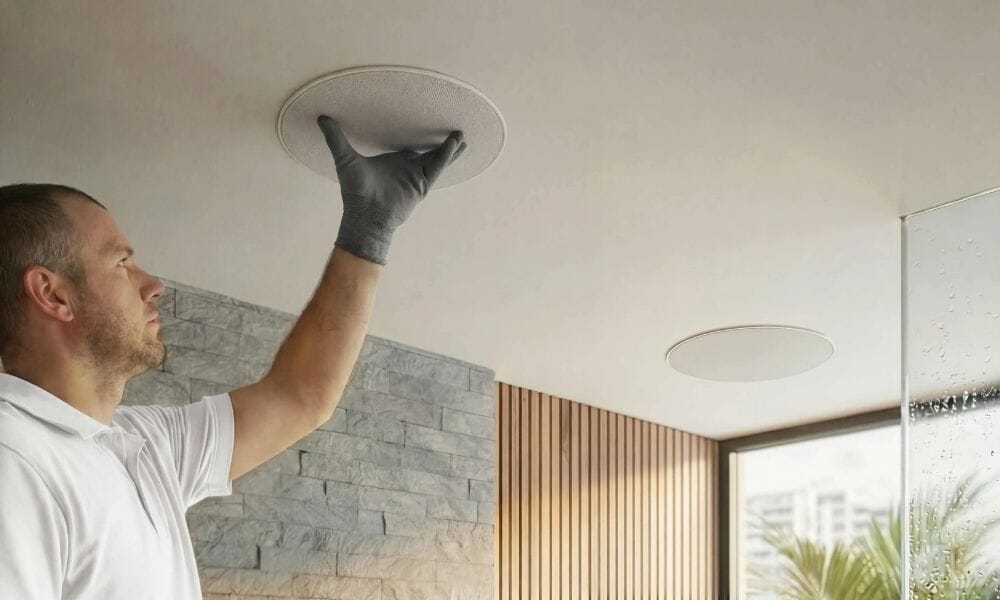
Here's the good news: putting music in your ceiling usually costs a lot less than people expect.
If you're handy, you can fit a complete Bluetooth ceiling speaker system yourself for around £120, with the speaker cable already in the box.
Prefer to hand it over? A great-sounding kitchen system can be fitted by an electrician for well under £1,000.
Search for ceiling speaker installation costs and you'll mostly find American guides quoting dollars, or price sites that lump ceiling speakers in with smart home gadgets.
Neither is much help when you're planning a new kitchen and wondering whether to add music while the ceiling is open.
So we've put together a proper UK guide.
Below you'll find real 2026 prices for DIY and electrician-fitted systems, what UK electricians charge, why adding speakers to a kitchen or bathroom project costs so little, and the easiest ways to keep your budget down.
The Quick Answer: Ceiling Speaker Installation Costs at a Glance
For most UK homes in 2026, here's what a ceiling speaker system costs including the equipment:
- DIY Bluetooth system: from around £120
- Active speakers fitted by an electrician: roughly £300–£470
- Added to a kitchen or bathroom project: roughly £370–£860
- Hi-fi kitchen-diner, retrofitted by an electrician: roughly £700–£1,100
- Music in three rooms: from around £1,100 DIY, or £1,500–£2,700 fitted
If you're paying for fitting as a standalone job, labour typically works out at £70–£150 per speaker. Add speakers to work that's already happening, though, and it's often just an hour or two of your electrician's time.
And because our amplifier and speaker bundles include speaker cable, there's usually nothing extra to buy.
What's Included In The Cost
Every ceiling speaker project comes down to the same few parts, and most of them are smaller than you might think.
The Speakers & Amplifier
This is the main cost. Passive ceiling speakers need a separate amplifier, while active (all-in-one) speakers have the amp built in.
Complete ceiling speaker systems start from under £80 and go all the way up to multi-room hi-fi, so there's an option for every budget.
For most homes, the sweet spot is £400–£600.

That buys you something like a WiiM Amp with Q Acoustics QI65C ceiling speakers (from £499), giving you Wi-Fi streaming, AirPlay 2, Spotify Connect and proper hi-fi sound. Prefer to mix and match?
Pair your own speakers with one of our ceiling speaker amplifiers, or read our guide to active vs passive ceiling speakers to see which type suits you.
Speaker Cable (Usually Included)
Here's a cost you can often cross off the list. Our curated amp and speaker bundles come with speaker cable in the box.
The WiiM Amp and QI65C bundle includes 20m (30m with two pairs), our six-speaker multi-room bundle includes 40m, and even the entry-level e-audio Bluetooth kit comes with 10m. For most rooms, that's everything you need.

Running cable further, or across several rooms?
Extra in-wall rated cable is inexpensive. QED QX16/2 low smoke zero halogen (LSZH) cable works out at under £1.70 a metre on a 100m drum.
Fire Hoods (Where Needed)
If your speakers go into a ceiling with a habitable room above (in a typical two-storey house, that's the ground floor), each one should have a fire hood to keep the ceiling's fire rating intact.

Speakers on the top floor with a loft above usually don't need them. Hoods are a small extra, starting from around £30, and most can be fitted through the speaker hole itself.
Browse our ceiling speaker fire hoods or read our guide to fire hoods for ceiling speakers.
Fitting
Doing it yourself? Fitting costs nothing but an afternoon.
Using an electrician? The price depends mainly on how easily cable can reach each speaker, which is exactly why adding speakers during building work is so affordable.
On most jobs, making good is nothing more than a dab of filler around the speaker.
Five Real-World Ceiling Speaker Budgets
These budgets use real 2026 prices from our range plus typical UK labour rates (£250–£400 a day for an electrician outside London).
Your own costs will vary, but they show just how affordable a ceiling speaker system can be.
DIY: A Bluetooth System You Fit Yourself (From £120)
Ideal for: bedrooms, home offices and kitchens, especially on the top floor with easy loft access.
- Kit: £120–£360, from an e-audio Bluetooth amplifier and ceiling speaker pair (from £119.99, with 10m of speaker cable included) up to a Q Acoustics E60 Bluetooth system (from £359)
- Fire hoods: £0–£70 (usually not needed with a loft above)
- Labour: £0, just an afternoon of your time
Total: from around £120
The amplifier plugs into a normal socket, the speaker cable is low voltage, and you stream straight from your phone with no app to set up.
It's a genuinely satisfying weekend project. Browse our Bluetooth ceiling speakers to compare options.
Electrician-Fitted: Active Speakers That Fit Like a Downlight (£300–£470)
Ideal for: anyone who wants the simplest possible installation, with no separate amplifier to hide.
- Kit: £249 for a Lithe Audio 6.5-inch Bluetooth ceiling speaker pair, including the cable that links the two speakers
- Fire hoods: £0–£70
- Labour: £50–£150, typically an hour or two
Total: roughly £300–£470
All-in-one active speakers have the amplifier built in, so they install much like a downlight: cut the hole, connect the power supply to the lighting circuit or a fused spur, and clip the speaker in.
There's minimal wiring, and it's the kind of job any electrician can do quickly. Explore our full range of active ceiling speakers.
Part Of A Kitchen Or Bathroom Project (£370–£860)
Ideal for: anyone already having a new kitchen, bathroom or extension fitted.
- Kit: £319–£599, from a Lithe Audio IP44 bathroom speaker pair (£319) to a WiiM Amp with four QI65C kitchen speakers (£599, with 30m of cable included)
- Fire hoods: £0–£140
- Labour: £50–£120, often just an hour or two on top of the main job
Total: roughly £370–£860
This is the cheapest time to add ceiling speakers, by a long way.
Your electrician is already on site, the ceilings are often open, and the speaker cable can go in alongside the lighting.
There's no separate call-out and no extra making good. We explain why in more detail below.
Retrofit: A Hi-Fi Kitchen-Diner With Wi-Fi Streaming (£700–£1,100)
Ideal for: adding proper hi-fi sound and easy streaming to a finished kitchen-diner.
- Kit: £499–£599 for a WiiM Amp with Q Acoustics QI65C or Monitor Audio C165 ceiling speakers, with 20m of speaker cable included
- Fire hoods: £70–£120 for two (needed with a bedroom above)
- Labour: £150–£400, from half a day to a full day
Total: roughly £700–£1,100
Kitchen-diners are where most people start, and for good reason.
It's the room you spend the most time in, and great music makes cooking, entertaining and family time that bit better. See our kitchen ceiling speakers for more ideas.
Multi-Room: Music in Three Rooms (From £1,100)
Ideal for: open-plan living or adjacent rooms such as the kitchen, dining area and living room.
- Kit: £949 for a WiiM Amp, speaker switch and six QI65C speakers, with 40m of speaker cable included
- Fire hoods: £140–£240 for four ground-floor speakers
- Labour: £0 if you go DIY, or around £375–£1,000 for one and a half to two and a half days of an electrician's time
Total: from around £1,100 DIY, or roughly £1,500–£2,200 fitted
This bundle plays the same music in every room, and you can switch each room on or off as you like.
Want different music in each room?
Three separate WiiM Amp and QI65C systems cost around £1,500 in kit, taking a fitted system to roughly £2,100–£2,700.
Our Wi-Fi ceiling speakers range has plenty more multi-room options, and if you're planning something bigger, our free design service (more below) will help you make every pound count.
Installing Ceiling Speakers Yourself Is Easier Than You Think
If you're reasonably handy, there's no reason not to fit passive ceiling speakers yourself.
Speaker cable carries a low-voltage audio signal rather than mains electricity, so it's safe to handle and run, and modern ceiling speakers are designed with DIY in mind.
Q Acoustics says its latest quick-fit models can be secured in around 30 seconds once the hole is cut and the cable is in place.
Here's what the job looks like:
- Plan your positions. Use the cut-out template supplied with the speakers and a joist detector to find a clear spot.
- Cut the holes. A plasterboard saw or hole cutter does the job in minutes.
- Run the cable. Feed speaker cable from each speaker position back to where the amplifier will live. With loft access, this is the easy bit.
- Connect and fit. Wire each speaker, matching positive to positive and negative to negative, add a fire hood if needed, then clamp the speaker into the ceiling.
- Plug in and play. Connect the amplifier, plug it into a socket and pair your phone.
The only part to leave to an electrician is any mains wiring, such as powering active speakers or adding a new socket.
Our ceiling speaker wiring guides and step-by-step guide to installing Bluetooth ceiling speakers will walk you through the rest.
Why Adding Speakers To A Kitchen or Bathroom Project Saves Money
If you're already having a kitchen, bathroom or extension done, now is the best time to add ceiling speakers.
Here's why it costs so much less:
- No separate call-out. Your electrician is already on site, so you're paying for an extra hour or two rather than a visit from scratch.
- Easy cable runs. With ceilings and stud walls open at first fix, speaker cable goes in alongside the lighting cable in minutes.
- No extra making good. The ceiling is being plastered and decorated anyway.
- Fitted with the downlights. At second fix, the speakers go in at the same time as the lights.
Just mention it to your electrician or kitchen fitter early, ideally before first fix.
For bathrooms, choose IP-rated bathroom ceiling speakers and have a quick read of our guide to bathroom zone regulations.
Not ready to buy speakers yet? Pre-wiring now keeps the option open, and our guide to pre-wiring your home for ceiling speakers explains exactly what to ask for.
What UK Electricians Charge To Fit Ceiling Speakers in 2026
If you'd rather hand the whole job over, here's what the 2026 UK trade price guides from Checkatrade, MyBuilder and others tell us:
- Hourly rate: around £40–£60 across most of the UK, with Checkatrade putting the average at roughly £50 (closer to £55–£75 in London and the South East)
- Day rate: typically £250–£400
- Per speaker: MyBuilder's guide puts fitting at £70–£150 per speaker as a standalone job
How long it takes depends mainly on access:
- Pre-wired or during a renovation: under 30 minutes per speaker
- Top-floor ceiling with a loft above: around an hour per speaker, including the cable run
- Ground-floor ceiling with a room above: a little longer, as the cable has to be fed between the joists
Any competent electrician can fit ceiling speakers.
It's similar work to fitting downlights, so there's no need for a specialist AV installer unless you're planning a home cinema or a large whole-home system.
Seven Easy Ways to Keep Costs Down
- Do the cabling yourself. Speaker cable is low voltage and safe to run, so even if an electrician handles the mains side, you can save on labour by running the speaker cable yourself.
- Add it to building work you've already got planned. It's the single biggest saving, as there's no separate call-out.
- Choose a bundle with cable included. Our curated bundles pair a matched amplifier and speakers with the speaker cable you need, so there are no extras to buy and no guesswork over compatibility.
- Go active in tricky rooms. All-in-one speakers need only a power connection, so there's no long cable run back to an amplifier.
- Use a single stereo speaker in small rooms. One Q Acoustics Qi65C-ST (£99.99) plays both left and right channels, so studies, cloakrooms and small bedrooms need one hole instead of two. See our full range of single stereo ceiling speakers.
- Keep the amplifier close to the speakers. A kitchen cupboard beats a cable run to the garage every time.
- Get the design right first. A clear speaker layout and kit list means you buy the right kit first time, and our design service is completely free.

Optional Extras Worth Knowing About
- Back boxes: optional enclosures that tighten up the bass and keep more sound in the room. Find out more in do ceiling speakers need a back box?
- Speaker switches: handy if you run more than one pair of speakers from one amplifier. Our six-speaker multi-room bundle already includes one, or you can add a speaker switch separately.
- A subwoofer: for fuller bass in bigger spaces. It's easy to run a cable for one now, even if you add the sub later.
Get a Free Ceiling Speaker Design & Kit List
Not sure where to start?
Our free home audio design service takes your plans and turns them into a recommended system with a full kit list and quote, and in some cases a speaker layout diagram too.
It's completely free, with no obligation to buy.
We don't fit systems ourselves, but we support you and your electrician with installation advice every step of the way, whether you're going DIY or handing it over.
And if you're getting fitting quotes, every electrician will be pricing exactly the same spec, which makes comparing them easy.
Frequently Asked Questions
Can I Install Ceiling Speakers Myself?
Yes. Passive ceiling speakers use low-voltage speaker cable, so they're safe and straightforward for anyone who's handy with basic tools. Just leave any mains wiring, such as powering active speakers, to a qualified electrician.
How Long Does It Take to Install Ceiling Speakers?
With cable already in place, a pair can be fitted in under an hour. A typical one-room retrofit takes half a day to a full day, and a DIY Bluetooth system is an easy afternoon project.
Do I Need Fire Hoods for Ceiling Speakers?
If the ceiling has a habitable room above it, which includes the ground-floor ceilings in most two-storey homes, fire hoods are needed to maintain the ceiling's fire rating. Acoustic hoods are worth considering anywhere, as they also reduce sound travelling into the room above.
Is It Cheaper to Add Ceiling Speakers During a Renovation?
Yes, much cheaper. Your electrician is already on site, cable can be run at first fix in minutes, and there's no extra making good. It's often just an hour or two of additional labour.
Do Ceiling Speakers Add Value to a House?
A well-installed system is an attractive feature for buyers, particularly in kitchens and open-plan living spaces. We look at this in more detail in will a ceiling speaker system add value to my house?
Final Thoughts
Ceiling speakers are far more affordable than most people think.
A DIY Bluetooth system starts from around £120, active speakers can be fitted by your electrician as easily as a downlight, and even a hi-fi kitchen system fitted from scratch typically comes in at around £700–£1,100.
To get the most for your money, fit it yourself if you're handy, add it to any building work you've got planned, and choose a bundle that already includes the cable.
Ready to start? Browse our ceiling speaker systems to find a setup that suits your budget, or send us your plans through our free home audio design service.
You can also call our team on 02393 190955. We'll recommend the right kit and help you get it right first time.


